Prompt & Circumstance Is a Gimmick That Happens to Cook Well
A Mountain View pop-up lets a language model write the menu each morning. The concept is exhausting. The cooking, inconveniently, is not.
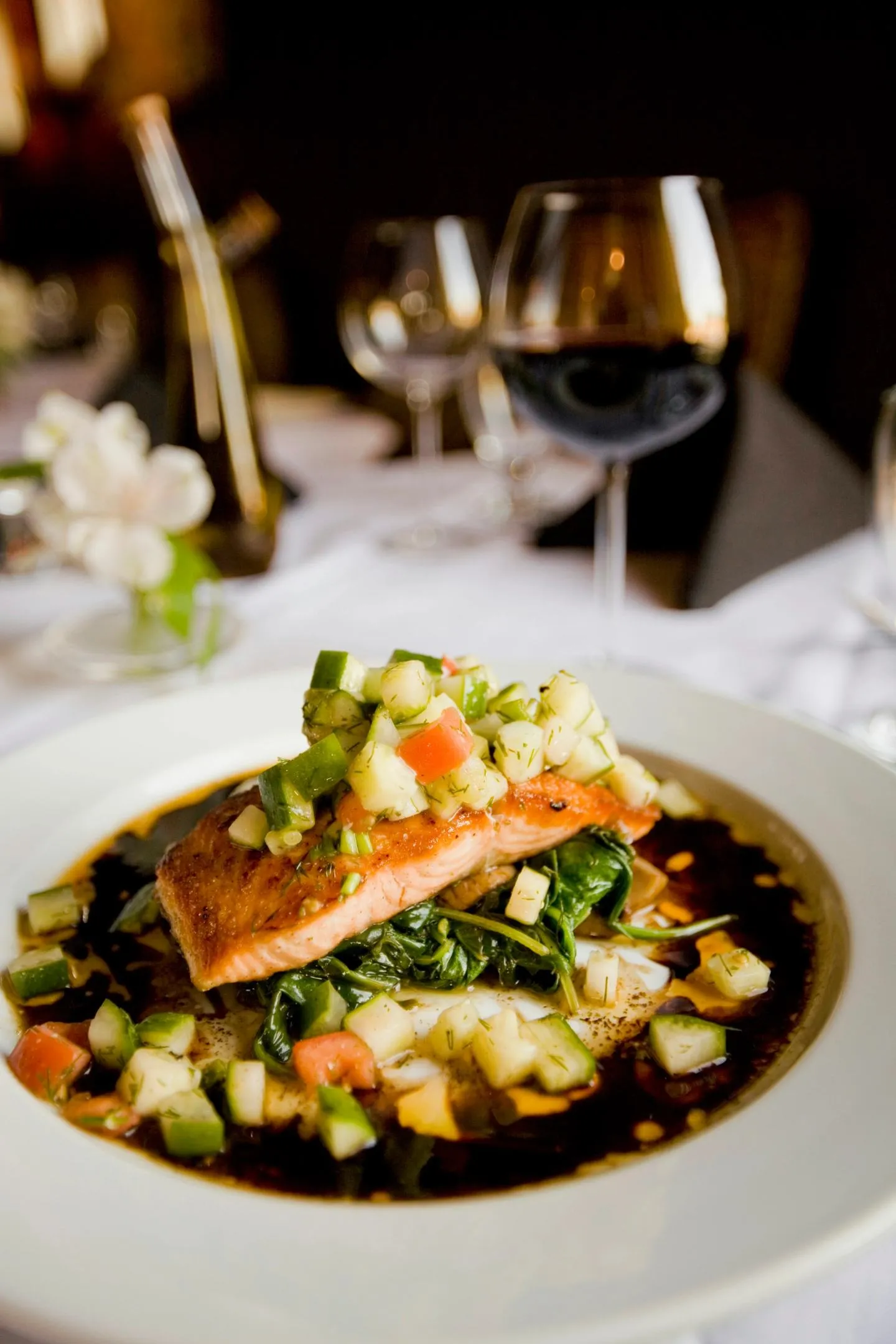
Every morning at 6 a.m., a language model at Prompt & Circumstance is fed the day’s delivery manifest, the previous night’s covers, a weather forecast, and — according to a laminated card on every table — "the collective mood of the Bay Area as expressed on social media." It then writes the menu. Six dishes. No substitutions. The kitchen finds out what it is cooking at the same time you do.
I want to be clear that I found this insufferable. I found it insufferable on the first visit, when a server explained the process for four minutes while my water glass sat empty. I found it insufferable on the second, when the laminated card had been updated to include a QR code linking to the day’s "generation log." I have rarely wanted so badly for a restaurant to be bad.
It is not bad. It is, irritatingly, quite good.
What is actually happening in the kitchen
The trick — and it took me two visits to see it — is that the model is not really designing dishes. It is picking combinations from a repertoire that chef Bao Nguyen has already tested, in a kitchen that already knows how to execute all of them. The constraint is doing what constraints do: forcing decisions quickly and preventing the endless fiddling that ruins so many young menus.
So on a Tuesday you get charred cabbage with anchovy butter and a fistful of breadcrumbs, and it is excellent, because charred cabbage with anchovy butter is excellent and always has been. On a Thursday you get a pork shoulder braised in cider with mustard greens, and it is excellent for the same reason. The machine is not inventing. It is choosing, from a list of good things, and then a competent kitchen cooks them.
When the system does reach, it reaches badly. A dish of scallops with strawberry and green peppercorn — generated, I am told, on a day the model was given a heatwave forecast — was a genuinely unpleasant plate of food, sweet and hot and grainy, and it went out to every table in the room for an entire service because nobody had the standing to overrule it. That is not a cooking failure. That is a management failure wearing a cooking failure’s clothes.
The machine is not inventing. It is choosing, from a list of good things, and then a competent kitchen cooks them.
Where to sit, what to spend
Sit at the eight-seat counter. From there you can watch Nguyen and two cooks work a very small line with real economy, and — more importantly — you are far enough from the dining room that nobody reads you the laminated card. The counter is also where the off-menu bar snacks live: a plate of fried shallots and cured egg yolk that appears on no generated menu, ever, because a human decided it should always be available. It is the best thing in the building.
Six courses run $78, which for Castro Street in 2026 is close to a bargain. Wine is a short, sharp list under $80 a bottle. Service is warm and slightly apologetic, in the manner of people who know the premise is a lot.
The pop-up runs through October, and Nguyen has said a permanent room is "being discussed." My advice, offered sincerely: keep the cook, keep the counter, keep the shallots, and quietly retire the robot. There is a very good restaurant in here already, and it does not need a co-author.
More from Reviews
At Ember & Oak, the Tasting Menu Finally Learns to Relax
Twelve courses in Los Altos that never once ask you to be impressed. After three visits, that restraint is the most radical thing on the peninsula.
Kaiseki Nishimura Is the Quietest Great Meal in San Jose
Fourteen seats, one seating a night, and a chef who has been refining the same twenty dishes for nineteen years. Book six weeks out.